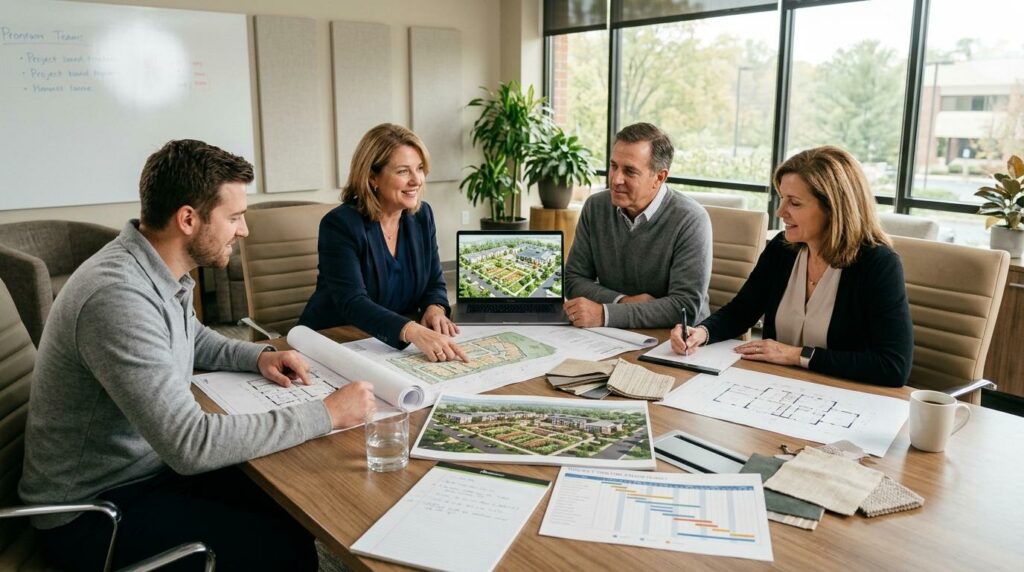
Senior living development sits at the intersection of real estate, operations, and healthcare-adjacent services. It is not a passive asset class. Every decision—from site selection to staffing models—directly influences performance, making it fundamentally different from traditional multifamily or commercial investments.
For investors, that complexity creates both risk and opportunity. A well-executed project can deliver stable occupancy, durable demand, and long-term value. Senior living community development is a layered process—but with the right knowledge and the right development consulting team, it can be one of the most rewarding investments you make.
Key Takeaways
- Senior living development combines real estate, operations, and care services, making it more complex than traditional investments
- Demand continues to grow in 2026 due to an expanding aging population and limited new supply in many markets
- Investment options include independent living, assisted living, memory care, and skilled nursing, each with unique cost and revenue models
- Market research and feasibility analysis are critical to aligning a project with real demand before development begins
- Design and construction decisions directly impact operational efficiency, staffing needs, and long-term performance
- Strong pre-opening strategy and experienced development partners help stabilize occupancy and support consistent returns
What Senior Living Community Development Actually Involves
Development in this space goes far beyond picking a plot of land and breaking ground. It starts with a clear vision and moves through market analysis, conceptual design, site selection, and full development management—what some call the journey from concept to keys.
Market analysis is where smart investment decisions take shape. You want to know who your future residents are, where demand is growing, and whether the local market can support your community. Skipping this step can mean building in the wrong location or offering the wrong services for your audience.
A 360-degree approach to development is critical. Your design decisions inform your operations, and your market research shapes your design. Those pieces must work together—that’s how you set your project up to perform well from day one.
The Senior Living Investment Landscape in 2026
Senior living remains a demand-driven asset class, supported by demographic shifts that are already underway. The aging population continues to expand, creating a sustained need for housing and care environments designed for older adults. This is not a speculative trend—it is a measurable, long-term shift in population dynamics.
At the same time, supply has not kept pace in many markets. Development slowdowns in recent years have created gaps between available inventory and projected demand, particularly in well-located, thoughtfully designed communities. For investors, that imbalance presents a clear opportunity when projects are aligned with the right market conditions.
The Types of Communities You Can Invest In
Not all senior living communities operate the same way, and each model carries different financial and operational requirements. The level of care provided influences everything from staffing ratios to regulatory oversight. There are 4 primary types of communities:
- Independent living, for residents who can stay entirely independent
- Assisted living, for those who need some everyday support
- Memory care, for those who require targeted cognitive care
- Skilled nursing, for residents needing advanced medical care
Some communities offer one care model only, while others blend different combinations together in their community. You’ll want to think ahead about what type of care you’ll offer, because that informs you of what your development will require.
Key Phases of Senior Living Community Building
A successful senior living investment depends on disciplined execution across each stage of development. From early feasibility through lease-up, every phase builds on the last.
Market Research and Feasibility Analysis
Every project begins with a clear understanding of demand. Market research defines who the future residents are, what level of care they require, and whether the surrounding area can support a new community. You need to evaluate competition, determine pricing benchmarks, and look at occupancy trends. A thorough feasibility analysis ensures the project is aligned with real demand—not assumptions—before capital is committed.
Concept Development and Design
Design decisions shape both resident experience and operational efficiency. Floor plans, common areas, and service spaces must support daily workflows while also meeting the expectations of the target demographic. It is not simply an aesthetic exercise—it is a foundational component of financial performance.
Development Management and Construction
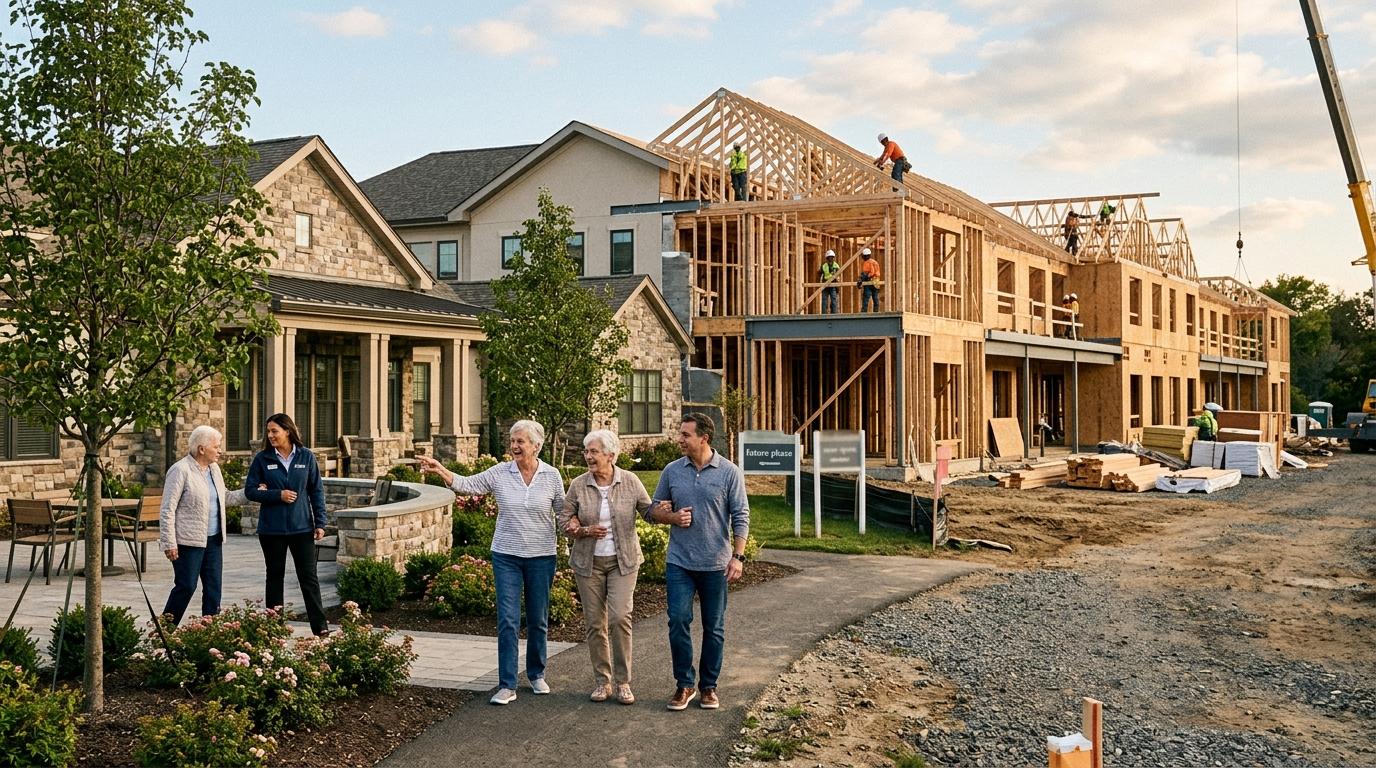
Once plans are finalized, execution becomes the priority. Development management ensures that timelines, budgets, and contractor coordination stay aligned throughout construction. Without structured oversight, delays and cost overruns can quickly erode projected returns; that’s why a disciplined approach is so critical.
Pre-Opening Strategy and Lease-Up
The transition from construction to operations is one of the most critical points in the development process. Pre-opening strategy includes staffing, marketing, and establishing systems that support daily operations. A strong start helps stabilize revenue quickly, while a slow ramp can extend the timeline to profitability.
How to Position Your Community for Long-Term Success
Opening a community is only the beginning. Long-term success depends on how well the property performs once residents move in. This is where the right development partner becomes essential.
An experienced team brings continuity across planning, execution, and management, helping ensure that early decisions support long-term performance. They understand how to align design with operations, anticipate challenges before they surface, and adjust strategy as market conditions evolve. For investors, that level of expertise reduces uncertainty and provides a clearer path from concept to sustained returns.
Take Your First Step Towards Investing in Senior Living Today
Senior living development offers a compelling opportunity for investors who understand how its pieces fit together. Demand is steady, but success depends on more than market conditions—it requires thoughtful planning, disciplined execution, and strong operational strategy from the outset.
With the right approach and the right team, a senior living community can deliver consistent performance and long-term value. And here at Distinctive Development, we know what steps will bring you closer to success. Let’s connect—our team is ready to get to work.